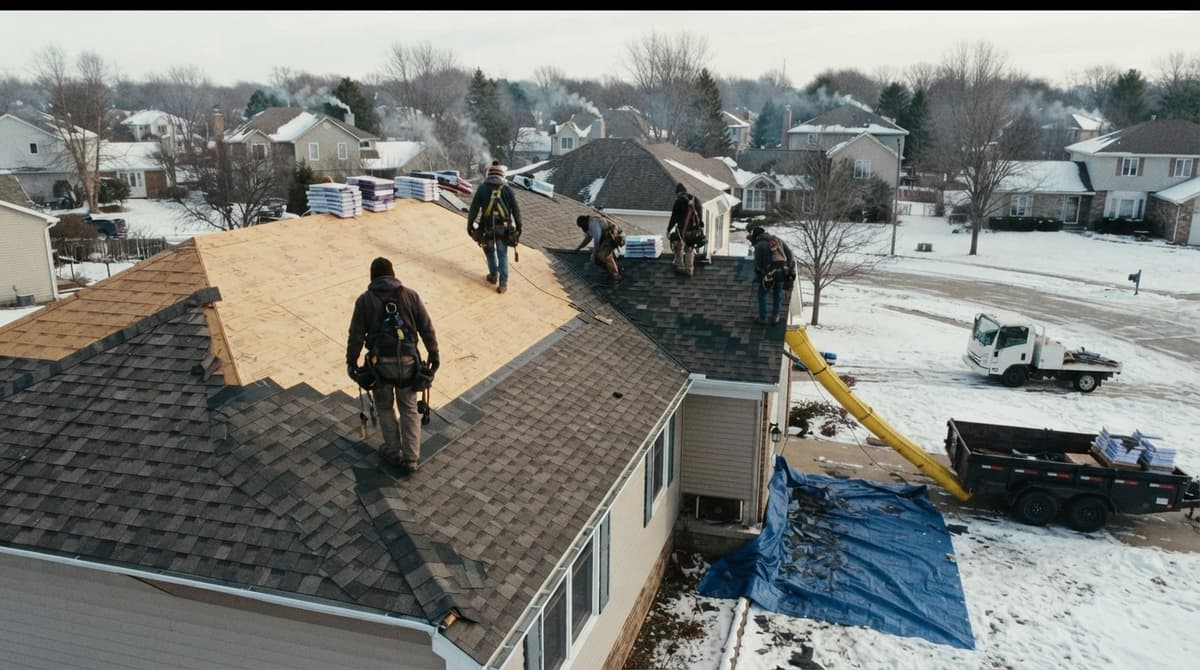
Can You Replace A Roof In Winter
Can you replace a roof in winter? Often yes. Learn how cold hits shingles, when to go or wait, and what to ask a roofer first.
Get in touchCan You Replace a Roof in Winter?
** The month matters less than the conditions. A dry, calm day in January can work well. A day with ice, rain, or high wind cannot. Good crews check the forecast and the roof each morning. They go ahead on safe days and wait on bad ones. Winter roof replacement takes planning, but it is common. It helps you decide whether to go now or wait for spring.
How Cold Weather Affects Roofing Work
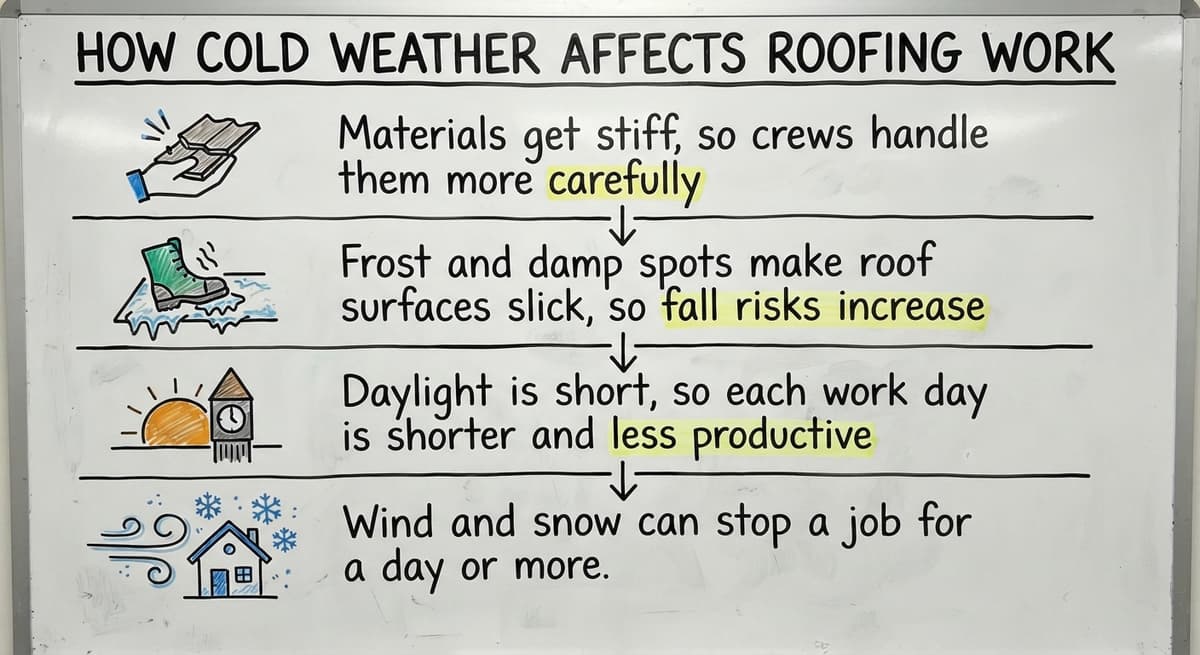
Roofing in cold weather changes how crews work. Cold slows the job and adds care at every step. Here is what changes on the roof:
Reviewed October 2026.
- Materials get stiff, so crews handle them more slowly.
- Frost and damp spots make roof surfaces slick, so workers move with care.
- Daylight is short, so each work day is shorter.
- Wind and snow can stop a job for a day or more.
The cold also affects people. The CDC's NIOSH program lists cold stress risks for workers, such as frostbite. Crews need breaks and warm gear. A roof job in winter may take longer than the same job in May. Plan for that from the start.
What Happens to Shingles in the Cold?
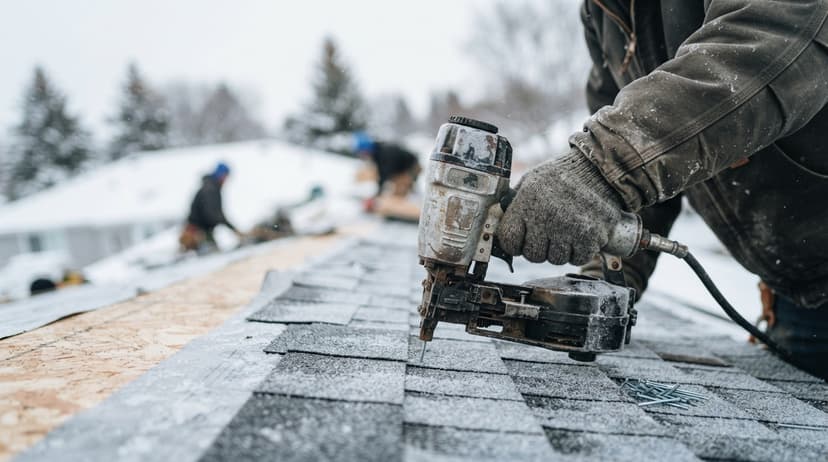
Shingles in cold weather get stiff and can crack if crews handle them roughly. Asphalt shingles are the common roof layer made of a mat coated with asphalt. In low heat they lose their bend.
Shingles also have a sticky strip. Sun warms it and glues each shingle to the one below. In winter, this can take far longer. Until it sets, wind can lift the shingles.
What is hand-sealing?
Hand-sealing means a worker presses a dab of roofing cement under each shingle. It does the job the sun would do. Many roofers use it in cold months. Ask your roofer how they handle it.
Every shingle maker prints its own cold-weather rules on the package. Check those rules rather than trusting a number from a web page. Your roofer should be able to show you.
What Temperature Is Too Cold to Replace a Roof?
No single number fits every roof. The right limit depends on the material, the product, and the day. The maker's installation guide sets the real rules. Ask your roofer to show you the page for your product.
Cold alone is often not the biggest stopper. Ice, rain, and strong wind stop work more often. A 25 degree day with no wind and a dry roof can be safer than a 40 degree day with a wet, slick deck. The National Weather Service posts winter weather safety guidance that helps explain why wind and ice matter.
Ask your roofer how they decide to go or wait. A clear answer is a good sign.
Benefits of a Winter Roof Replacement
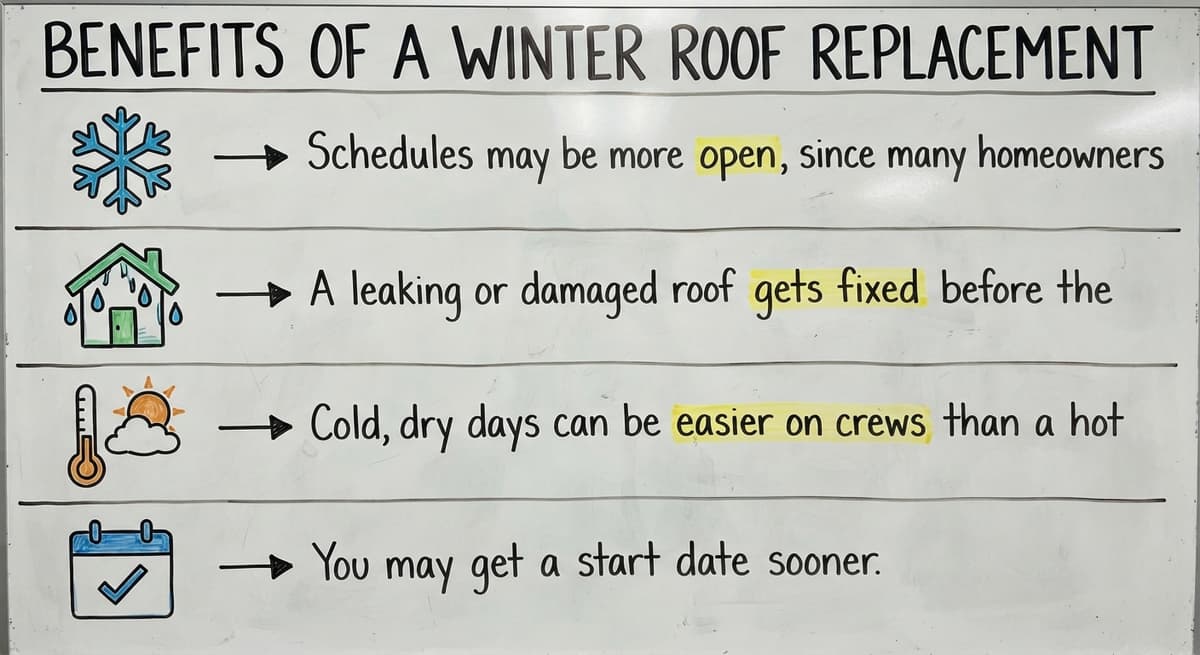
A winter roof replacement has real upsides. Some are small, but they add up. Here are the main ones:
- Schedules may be more open, since many homeowners wait for spring.
- A leaking or damaged roof gets fixed before the harm grows.
- Cold, dry days can be easier on crews than a hot summer afternoon.
- You may get a start date sooner.
We will not promise lower prices. Rates depend on the roof, the material, and the job. Ask for a written scope and compare it with other bids. A fair plan matters more than the season.
Risks and Downsides to Know About
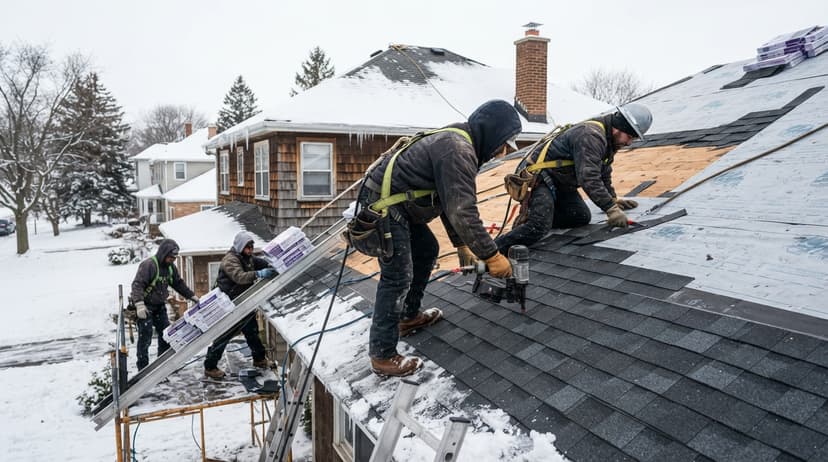
A winter job has risks too. Honest planning means knowing them. These are the main ones:
- Weather delays can push the schedule back by days. If a 2 day job loses 1 day to snow, it runs 50% longer.
- Rushed work on bad days can cause problems later, such as loose shingles.
- Snow and ice raise the fall risk. OSHA lists fall protection rules for roof work.
- An open roof is exposed if a storm hits before the job ends.
None of these ends the plan. They just mean you should pick a roofer who will wait when waiting is right.
When Should You Wait Until Spring?
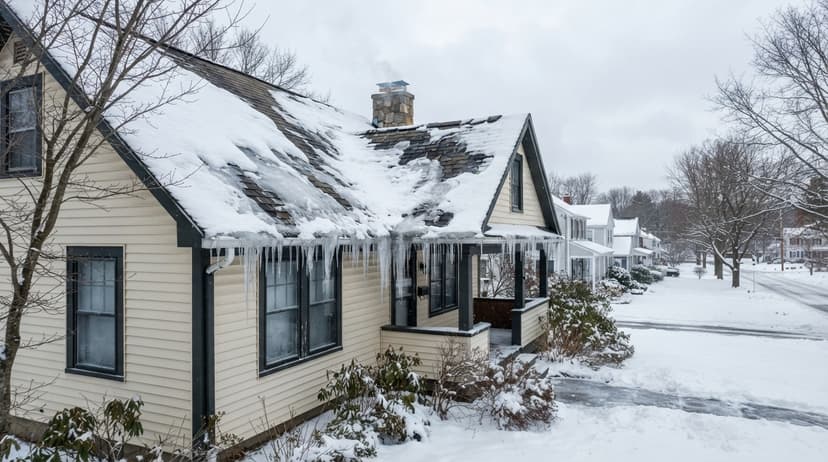
You may wait for spring if your roof is in fair shape and has no leaks. The choice is yours. Make it with good facts.
Waiting can make sense in these cases:
- The roof has no leaks, stains, or missing shingles.
- The forecast shows days of ice or heavy snow.
- Your roofer cannot give you a clear cold-weather plan.
A small temporary repair can bridge the gap. A roofer can seal a weak spot or cover a bare patch. Then you can book the full job for a milder season. A look at the signs you need a new roof is not enough on its own. Have someone check the roof in person.
When Should You Not Wait?
Do not wait on an active leak, missing shingles, or storm damage. These need a look soon. Waiting can let a small issue grow. Stay calm. A quick check often shows how urgent it is.
Water in the attic can soak insulation. Wet insulation works poorly. Damp wood can grow mold. The EPA explains how mold grows in its mold guide. Dry the area fast and fix the source.
Storm damage roof repair may come first, with full replacement later. A short inspection can show which path fits. Ask for photos and a written note of what the roofer finds.
Which Roofing Materials Work Best in Winter?
No one material is best for winter, but asphalt shingles can go on in cold weather with care. Crews handle them gently and often hand-seal them.
Metal panels handle cold in a different way. They do not need the sun to seal. They can be slick when frosty, so crews must take care. Other materials have their own rules.
Keep it simple. Ask your roofer which material suits your home, your budget, and the season. Then read the maker's cold-weather notes for that product together.
Questions to Ask a Roofer Before a Winter Job
Good questions show how a roofer works. Bring this list to your first talk about roof replacement in winter:
- How will you handle cold shingles and sealing?
- What is your plan if the weather turns?
- How will you protect the open roof overnight?
- What will you do if snow or ice stops work for a day?
- Can I get the plan and scope in writing?
- Who will be on site each day, and who do I call with a problem?
Listen for plain, direct answers. A roofer who hedges or rushes you may not have a plan. Written answers are best, since you can check them later.
How to Get Your Home Ready for a Winter Roof Job
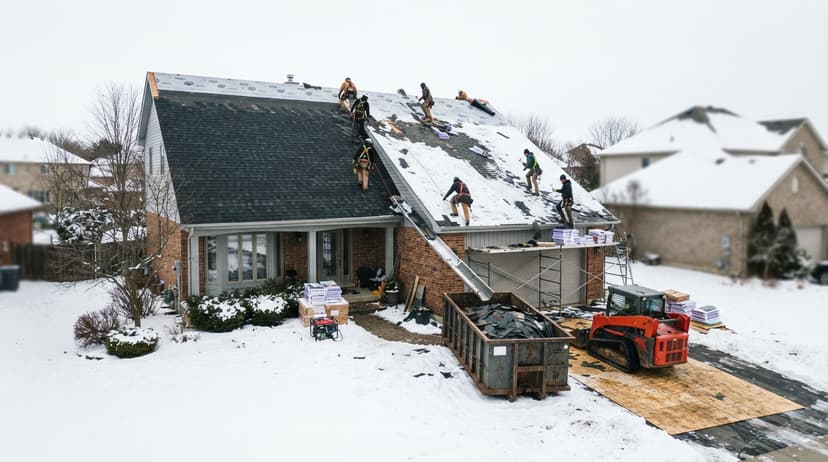
A little prep helps the crew work fast and safe. It also keeps your home tidy. Do these things before the start date:
- Clear the driveway and the area near the house, so the crew can park and unload.
- Move cars and loose items from the yard edges.
- Take down wall art and secure things on attic shelves, since hammering shakes the house.
- Cover or move items in the attic that dust could settle on.
- Plan for noise, and for workers on site for most of the day.
Tell your pets and kids to stay clear. Good prep means fewer delays on a short winter day.
Talk With a Local Roofing Team About Your Roof
True Vision Exteriors is based in east Columbus and handles roof replacement. It offers owner-led service with Eduardo. If you want someone to look at your roof, you can use the request a visit page. Requests are confirmed by phone. For the towns the team covers, see the service areas page. A clear plan beats a quick sales pitch, in any season.
Frequently asked questions
What temperature is too cold to replace a roof?
No single number fits every roof. The limit depends on the material and the maker's installation guide. Ice, rain, and strong wind often stop work before cold alone does. Ask your roofer to show you the guide for your product and explain how they decide to go or wait.
Do shingles seal in cold weather?
They seal more slowly. Shingles use sun warmth to glue down. In winter that can take longer, so many roofers hand-seal them with roofing cement. Ask your roofer how they handle it, and check the shingle maker's instructions.
Is it bad to put a new roof on in the winter?
Not by itself. A roof can be done well in winter on a safe, dry day with the right care. It becomes a problem when work is rushed on icy, wet, or windy days. Choose a roofer who will wait when the weather says to.
Is it cheaper to replace a roof in winter?
Not always. Some roofers have more open schedules in the slow season, but we cannot promise lower prices. Cost depends on the roof size, the material, and the repairs needed. Get a written scope from each roofer so you can compare the same work.
How much does it cost to replace a roof on a $4000 square foot house?
The question mixes a price and a size, so no honest figure fits it. Cost follows the roof area, not the floor area of the house. Roofers count in squares, and 1 square is 100 square feet of roof. A 2,000 square foot roof is 20 squares, and many roofers add about 10% for waste, so 22 squares. Pitch, layers, and material change the total. Ask for a written estimate after an inspection.
Does a 20 year old roof need to be replaced?
Not always, but it is worth a close look. Roof life depends on the material, the weather, and the care it got. Check for curled or missing shingles, leaks, and stains in the attic. A roof inspection can tell you if it has years left or needs replacement soon.
Should I wait until spring to replace my roof?
You can wait if the roof is in fair shape with no leaks and the forecast shows ice or snow. A temporary repair can bridge the gap. Do not wait on active leaks, missing shingles, or storm damage.
How do I get ready for a roof replacement?
Clear the driveway and the area near the house. Move cars and yard items. Secure things on attic shelves and walls, since hammering shakes the house. Plan for noise and for workers on site most of the day.
Start with a free first look
A 30 minute call, your operation mapped, and a clear picture of what we would build. No obligation and nothing to install.
Get in touchRelated guides
More on the same work.
Guides
- Roof Replacement Whitehall Oh
- Roof Replacement Reynoldsburg Oh
- Roof Replacement Groveport Oh
- Roof Replacement Pataskala Oh
- Roof Replacement Bexley Oh
- Roof Replacement Blacklick Oh
- Roof Replacement Columbus OH
- Roof Replacement Pickerington Oh
- Roof Replacement Canal Winchester Oh
- Roof Replacement Worthington Oh
- Roof Replacement New Albany Oh
- Roof Replacement Westerville Oh
- Roof Replacement Lancaster Oh
- Roof Replacement Lithopolis Oh
- Roof Replacement Dublin Oh
- Roof Replacement Grove City Oh
- Roof Replacement Gahanna Oh
- Roof Repair Gahanna Oh
- Roofing New Albany Oh
- Roofing Gahanna Oh
- Roof Repair Worthington Oh
- Roofing Groveport Oh